
The naive desire for more responsibility and to become more of an “adult” started much like my earlier changes in life, with no plan or idea where to begin.
Jobless in the Dominican Republic
After leaving Japan, I spent a couple of jobless months living in my girlfriend’s tiny shack in the Dominican Republic as she finished out the rest of her service in the Peace Corps.
Those months were a ton of fun, and I was giddy with the endless prospects I created in my head for the future. Maybe we’d stay in the DR. I’d get a job teaching English at a school in a small, developing town, spending afternoons drinking ice-cold Presidentes on the beach.

I spent a few rainy weeks in the tiny home with my girlfriend, her dog Chiquito and cat Leo, making Spanish language flashcards and studying “English Language Praxis for Dummies,” which I needed to pass to apply for graduate school. Because the rural DR essentially shuts down during heavy rainstorms and the power fluctuates, I had tons of distraction-free time to study.
Okay, so I did have a subtle plan. I’d pass the Praxis so I could get into graduate school, and from there I’d be eligible to work in public schools throughout the US. I planned on staying in the DR for a few months, making up for the two years my girlfriend and I spent apart while I was in Japan.
For two months, I wandered around the DR with my girlfriend on a cheap motorcycle I bought from an acquaintance. Mostly, though, I pushed the old thing to the nearest repair spot, as it broke down more often than it worked.

I wanted to get back to New Orleans to start applying for jobs before schools let out for summer break. My friend Darrell sent me the Jefferson Parish Schools job board, and I spent the summer applying for different teaching jobs. Unfortunately, I missed out on the Creative Writing gig I had my eye on at his school, but there were tons of other positions open throughout the parish (the Louisiana version of a county).
I was hired almost immediately, initially as an English as a Second Language Teacher, until the school lost their English III teacher, and I was coopted to take their place. I would teach English Lit to Juniors at a school in Metairie, a suburb of New Orleans. As a private Catholic school boy, I had no idea what was in store for me in the year to come.
Grace King High School: A Different Breed of Teaching
My job at Grace King began a few weeks before school started. I was excited to get to the school for some professional development, where I’d get some practical training before I stepped into the classroom.

The first three hours of “development” were spent explaining how I should configure my blackboard. The presenter gave me all of the information I needed to have on the blackboard each day, from the lesson schedule to how each activity applied to the Common Core Standards, which I had never seen before that moment.
“Why are we spending so much time on what we write on the blackboard?” I thought to myself, naively. It turns out, our performance as teachers would be rated on a strict rubric, and part of my teaching score would depend on the perfection of the information on my blackboard.
Behind the teacher’s scores was the threat of pay cuts or even termination if we failed to measure up.
“Apparently, students really pay attention to these blackboards,” I thought at the end of the day. Spoiler: they didn’t give a single care.
I went home that night and tried to filter through the Common Core Standards, not understanding a single thing. Luckily, the teacher in the classroom next door had tons of information for me, and we did all the lesson planning together.
Thrown In the Deep End
I walked into my first week of class with good intentions and a severe case of naivety. I still had my outdated private school teaching ideals in the back of my mind as I stood in the front of the class, reading a dense article that was so boring that I immediately forgot its title and explained aspects of the writing.
If my students weren’t asleep, they were not-so-sneakily glancing at their phones in their bags or in their pockets.

Again naive, I started the forever-losing battle of holding my students’ attention over their phones. I rained down threats to confiscate their phones and did if I caught them on it multiple times. I even called in the disciplinary dean to come to class when the students wouldn’t surrender their beloved devices.
This was a huge waste of time and energy, especially after my students would explain that other teachers would just freely allow them to use their phones. “Ms. So-and-So says it’s not worth the fight. If you want to use your phone, use your phone.”
“Well, I’m not Ms. So-and-So,” I’d stubbornly respond.
For the most part, I really enjoyed the students in my classes. I had a lot of motivated kids who wanted to learn, enjoyed reading, and were generally good people.
But my first period class was a nightmare.
Smelling fresh blood, these kids spent the first period as if it was a toxic Overwatch lobby, chatting and yelling inappropriate things at each other. Classes started at 7:05 AM. I couldn’t believe the energy levels of these kids at an hour when I was still processing my first cup of coffee.
For the first few months, I dreaded going to work. Waking up at 5:30 AM and leaving the house as the sun rose, I’d put on Shawn Wasabi’s song, “Otter Pop,” on repeat. The song’s poppy, happy repetition of “ah-ah-ah-ah-Otter-Pop-pata” was the only thing cheering me up as I drove the 30 minutes to Grace King to face these devilish children.
Unreasonable Expectations
At the time, the section of Metairie, the New Orleans suburb where I taught, had the fastest-growing population of Latino immigrants in the country (according to my principal). Students were tested in various subjects and placed, sometimes the day after they arrived in the States, in classes at Grace King.
My students were probably around 50% English-Langauge-Learners, and a handful of them didn’t speak a word of English to me despite spending four to five months in my class.
Despite this, the expectation from the administration was growth. Students who scored “Good” on their End of Course Exams the year previously should score “Excellent” this year. The same goes for students who scored “Poor.” This year, they were expected to earn a “Fair” grade. High expectations for people who had no idea what was going on in my classroom on a day-to-day basis and with whom I couldn’t communicate.
My first group of kids, to my surprise, showed moderate “growth.” I put growth in quotation marks because I think judging students’ growth based solely on one end-of-course test is insane, but that is neither here nor there.

In my second semester, which was much shorter than the first and full of breaks (Mardi Gras, Easter, Spring Break, and so on), my students showed a little bit of growth, but not much. Some actually regressed.
I found this information in a meeting between the principal, vice principal, the English III teacher who helped me throughout the year, and myself. The scores were presented to us in the principal’s office as if my coworker and I were bad students caught smoking in the bathroom.
The principal showed us the scores, disappointedly, and simply asked, “What happened?” in an accusatory tone. We had no time to analyze the data. We didn’t even know which students scored what.
I sat quietly while my coworker gently explained that we needed to look at the data before we could tell her, “what happened.” The principal’s tone was sharp and unforgiving. These scores affect the grade the school is given, and they are her responsibility.
Moving on… For Everyone
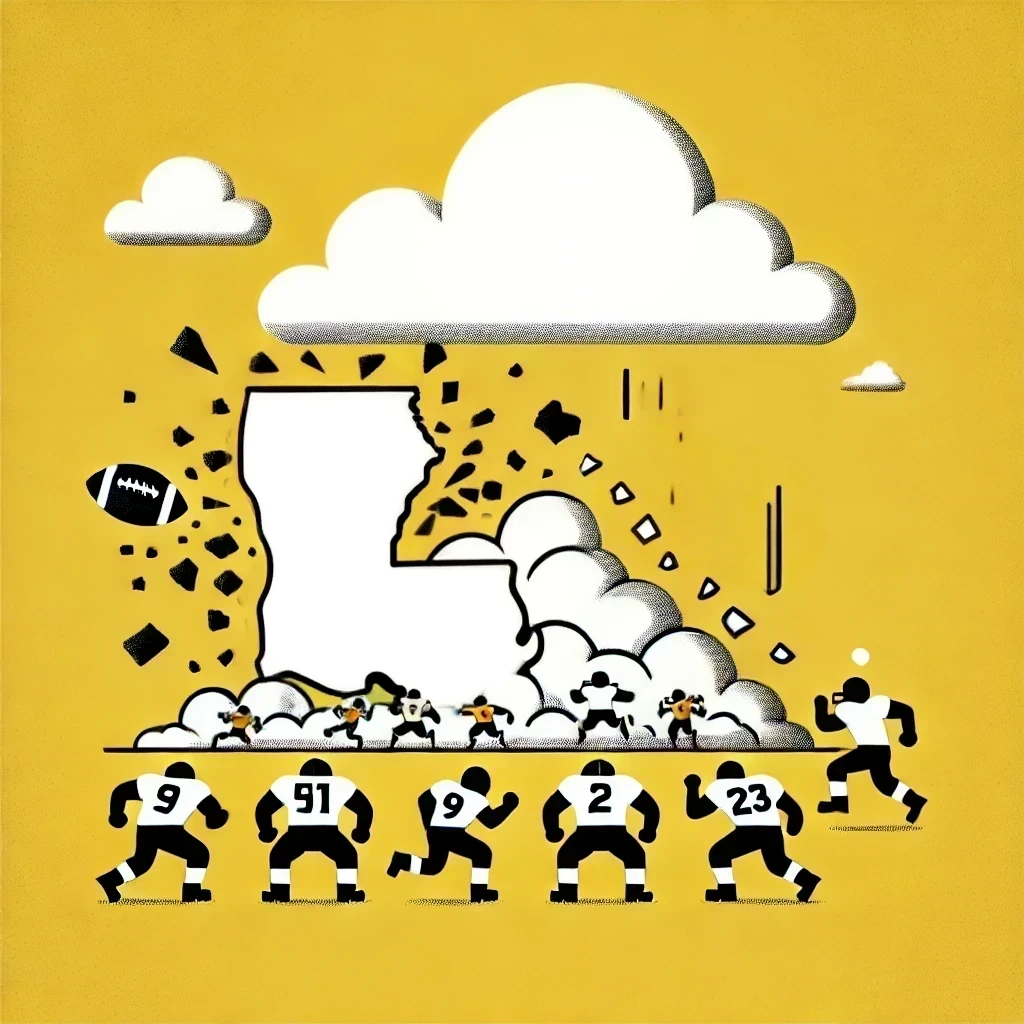
What does Louisiana lose faster, land sinking into the Gulf of Mexico or teachers?
My coworker was livid after the meeting. She’d been a teacher for eight years and felt the accusatory tone and surprise meeting were unprofessional.
I’d already secured a job at my Alma Mater Jesuit High School, a private Catholic school, for the next year. The vice principal mentioned in the meeting I’d enjoy teaching there “at a school with lower stakes.”
The other English III teacher also had enough. She applied for a position as a college counselor at another school and decided to leave the teaching profession for good.
Though the last meeting at Grace King left a bitter taste in my mouth, overall, I can look back at the year as a good experience. Yes, some students were true nightmares, and it only took one bad apple to ruin a class.
But a vast majority of the students there were hard working, kind, and interesting. Through my struggles as a first year teacher, I thought I’d made it through the toughest phase of my career. I heard that most new teachers don’t to the Thanksgiving Break, and I made it through the year.
With my new position at Jesuit High School coming up, I looked forward to what new experiences I’d have in the future. I ignored the warning signs of the previous year, as I was on a self-inflicted crusade to “make a difference.”




Leave a Reply